The hair straightener that doesn’t damage hair: does It really exist?
It’s one of the most common questions clients ask in the salon: “Does an hair straightener damage your hair?”
For those who work with heat every day, the answer is never absolute. Because the point isn’t the hair straightener itself, but how the heat is used.
Any heat source, if poorly managed, can compromise the hair fiber. At the same time, when heat is controlled and distributed correctly, it can become an extremely effective tool without being aggressive.
The real problem isn’t the heat, but the passes
In everyday work, it happens often: the temperature is increased to speed things up. It’s an automatic reaction. But it’s rarely the solution.
When heat is too high or uneven, the hair doesn’t respond immediately, and you end up going over the same section multiple times.
That’s where the damage occurs—not in a single pass, but in repetition.
That’s why today the real difference between one hair straightener and another isn’t how hot it gets, but how the heat performs.
Bio-infrared: a different way of working with heat
New technologies are born from this exact need: to improve how heat interacts with the hair.
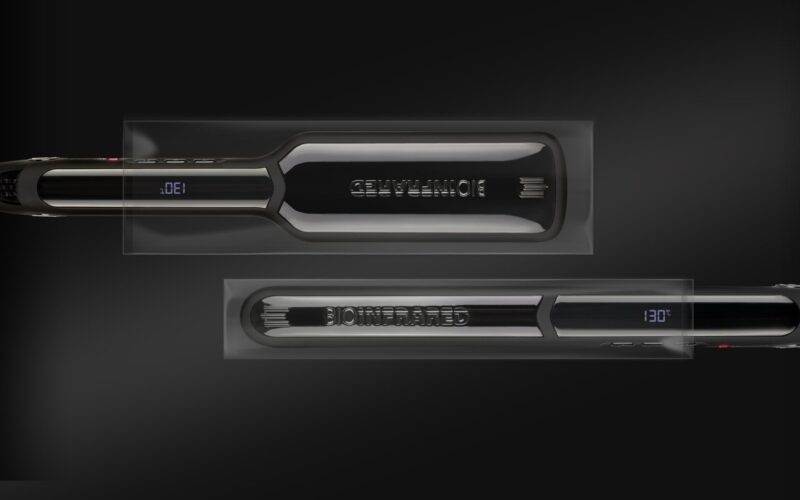
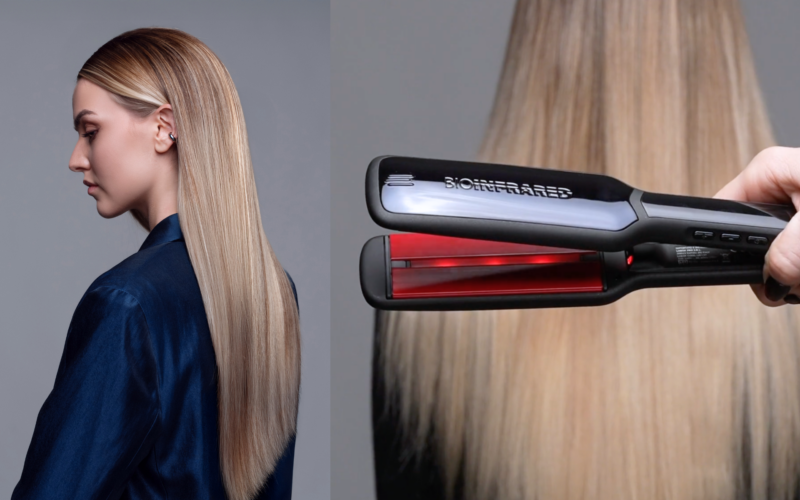
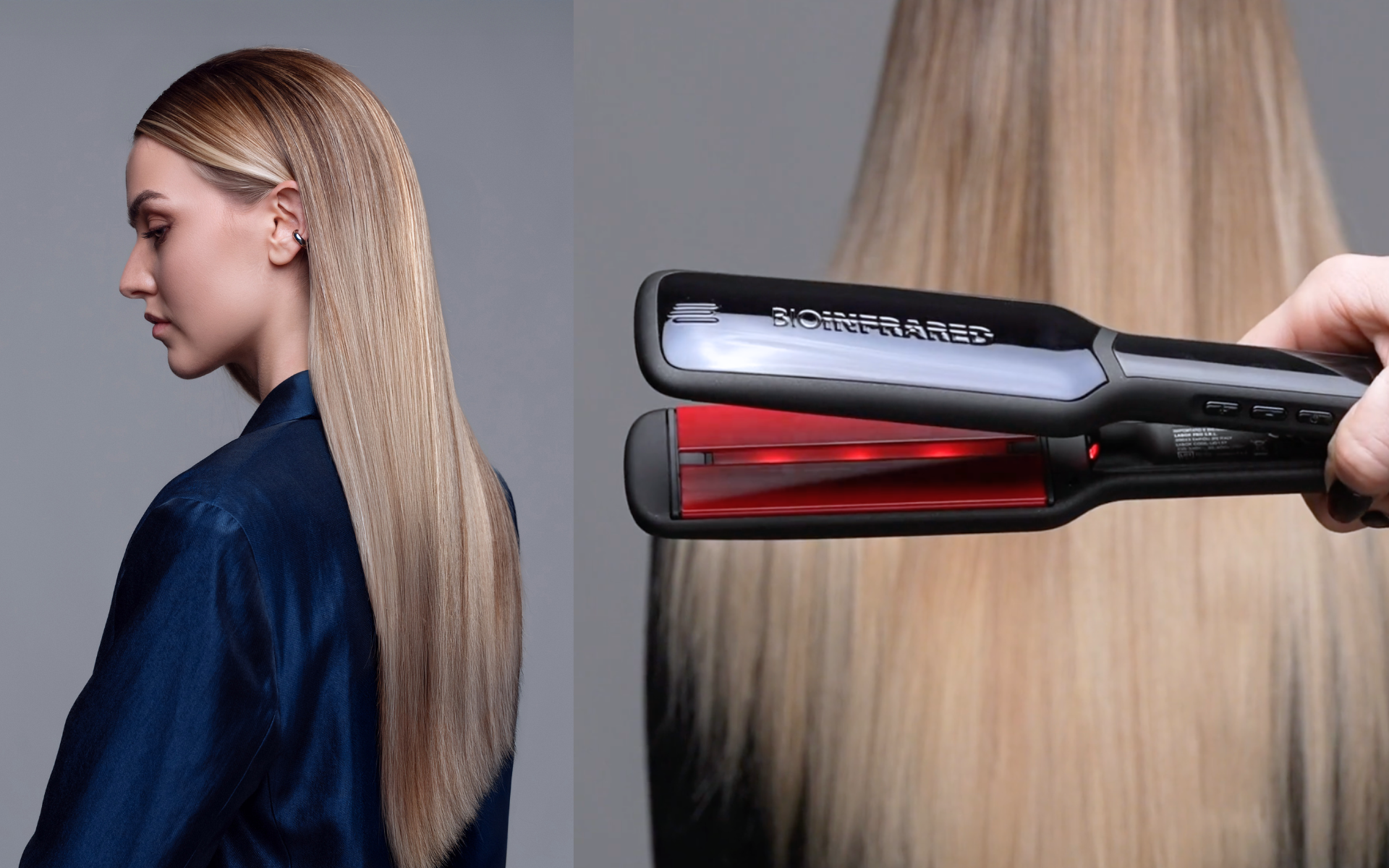
Bio-infrared follows this approach, using infrared technology that allows heat to penetrate directly into the hair fiber, working on shape from within.
This completely changes the way you work: the inner structure of the hair is shaped, while the outer layer remains protected, less stressed, and less exposed.
How to use an hair straightener without damaging the hair
When technology works properly, the approach changes as well.
This is the principle behind hair straighteners like Slim2 and Large 2: tools designed to work with consistency and control—not to increase force, but to improve the quality of the result.
It’s no longer necessary to constantly raise the temperature to achieve performance. Around 160°C is already effective, precisely because the heat is used in a targeted way. And most importantly, it reduces the number of passes.
The result is visible immediately, but it’s also noticeable over time: hair that is shinier, more compact, and less stressed.
In conclusion
An hair straightener that doesn’t damage hair does exist—but it’s not a shortcut.
It’s the result of a balance between tool and method. Technologies like Bio-infrared help improve how heat is applied, but it’s always the hairstylist who makes the difference. Because the result isn’t measured only in the moment, but in how the hair responds over time.